
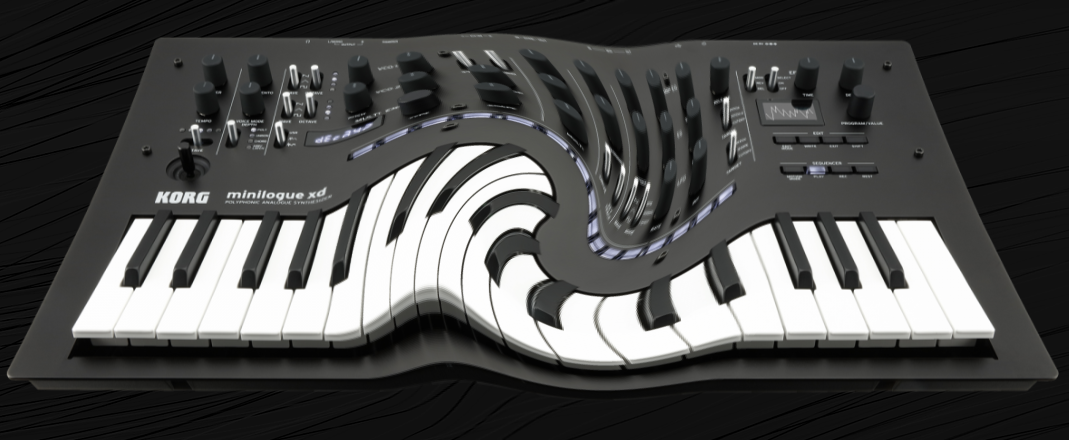
Let’s talk about the release of a new freeware plug-in that has been made for the Korg Logue platform. Various products from the Japanese company indeed allow for the loading of third-party plug-ins, namely:
- NTS-1 and NTS-1 mk2
- NTS-3
- Minilogue XD
- Prologue
- Drumlogue
- microKORG 2
Depending on the plug-in, this allows the units to gain capabilities in areas such as delay, reverb, modulation, and general effects-as well as synthesis and sound generation-thereby making the devices in question far more versatile very quickly.
For my first foray into this platform - which I’ve particularly loved ever since I had the chance to review the Korg NTS-1 for AudioFanzine, an experience that allowed me to dive into the world of associated third-party plug-ins - I chose to develop and release a somewhat unique type of effect: a phaser algorithm, called Phaser-Vibe.
I want to say that I particularly appreciate the effects and content Korg has offered in this regard. I’ve always had a soft spot for the reverbs found on each machine - such as “Submarine” or “Horror.” However, I wasn’t fully satisfied with the modulation options, especially the phasers - particularly given that I’ve had the opportunity to work on this subject over the years, notably while developing the Spaceship Delay plug-in.
There are actually various ways to design a digital phaser algorithm, and each type produces a very different sound. Fundamentally, a phaser is an effect that mixes a “dry” signal with a “wet” signal processed by several all-pass filters in series. These filters do not affect the signal’s amplitude-frequency response but do drastically alter its phase. This is how phasers operate in the analog world, and - most of the time - in the digital realm as well.
While this phase distortion is barely audible on its own, it becomes noticeable when the single parameter of these first-order all-pass filters-the cutoff frequency around which the phase distortion is centered - is modulated (for instance, by an LFO). Depending on the LFO’s waveform and the amplitude of the resulting pitch-shifting or vibrato effect (features sometimes found in commercial phasers), this creates a relatively subtle sound. However, the effect’s characteristic sound emerges primarily when this processed signal is summed with the dry signal: the phase distortions transform into clearly audible notches-especially when they are in motion.

It is also worth noting that these notches can be produced in various ways. Some digital phasers generate them directly-without relying on a mix between dry and wet signals-and allow for more advanced control over their spacing compared to the classic phaser design, which applies the same cutoff frequency to all all-pass filters, resulting in a somewhat predictable sound. Other phasers employ second-order all-pass filters, which further alters the characteristics of the effect. Then there are effects that create these notches using a short delay line, where the specific delay time determines the number of notches. This is the standard operating principle for chorus and flanger effects; in these cases, the notches are generally spaced linearly (with a constant frequency interval in Hz between them), whereas in phasers, they are spaced logarithmically (with a constant interval in octaves between them).
If we also add a feedback loop between the output and the input, these dips take on a different shape, and the effect becomes more pronounced-even taking on a somewhat metallic timbre.
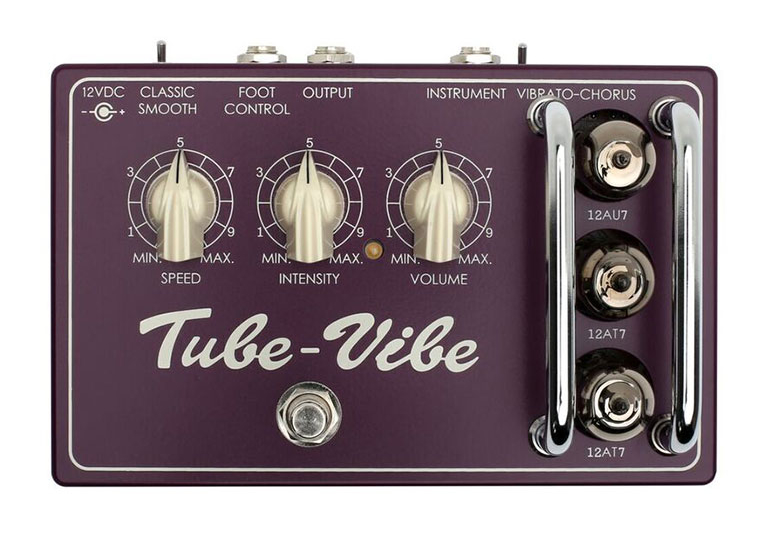
So, what actually makes my phaser different from others? For starters, it features a very classic structure with a feedback loop, but the cutoff frequencies differ across the all-pass filters. This is actually quite unusual for analog phasers-except for Uni-Vibe clones or units influenced by them. Historically, those were the first types of phasers-originally designed to emulate Leslie cabinets in pedal form-and that specific characteristic (which gave my effect its name, unrelated to “vibe-coding”) contributes to the sound of that legendary pedal (along with other factors, of course).
Another point of interest is the shape of the modulation signal from the LFO and how it translates into an actual cutoff frequency for the all-pass filters. This might seem insignificant at first, but factors such as:
- the transition from a linear to an exponential curve,
- the inertia of certain components - like the optocouplers acting on the filters - which itself depends on the modulation depth or polarity,
- the initial waveform shape,
all contribute to the phaser’s final audible signature; indeed, some analog phasers (and their emulations) derive their distinctive coloration from these characteristics, rather than simply from the number of notches.
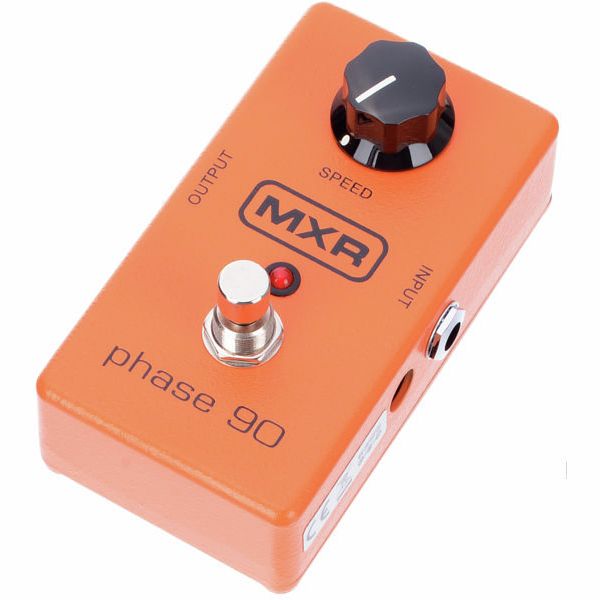
Finally, let’s add the modeling of all the signal filtering elements within the phaser beyond just the all-pass filters, such as the feedback path and the tendency of certain units (like the MXR Phase 90) to saturate in a specific way. Combine this with the algorithm’s ability to accurately model feedback-specifically using the renowned “zero-delay feedback” techniques I’ve employed here instead of a simple delay-and you get a range of distinct tonal characters, including the one I’m presenting here!
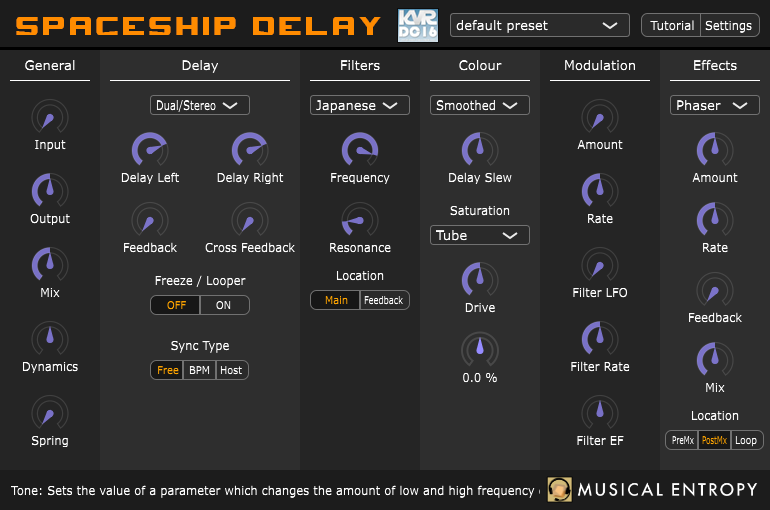
Incidentally, if you want to use it on something other than a Korg machine, it happens to be available in Spaceship Delay as well, and can be used standalone.
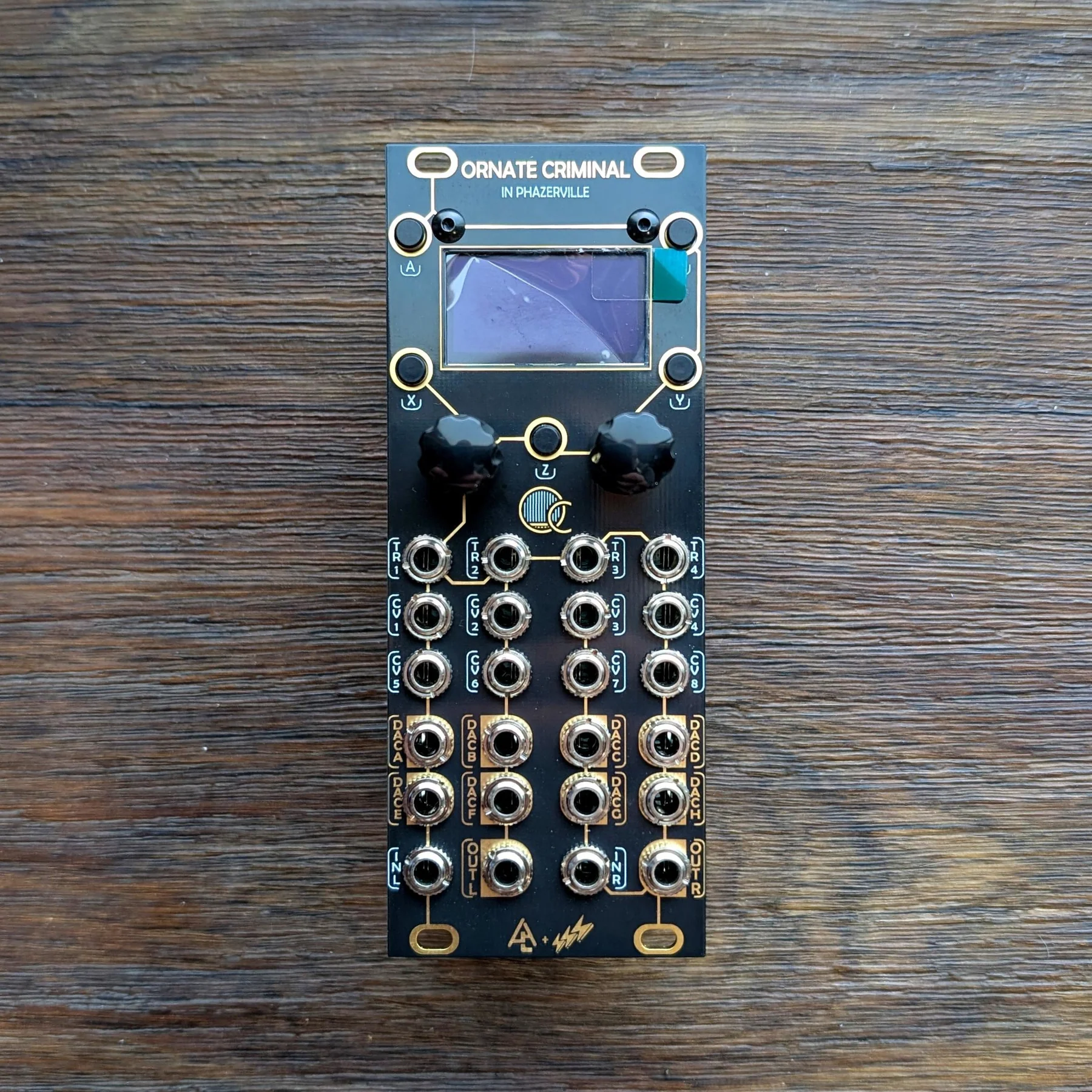
Fun fact: there is also a version of my phaser algorithm in the Phazerville Suite firmware for my favorite Eurorack module, the Ornament & Crimes - specifically the Teensy 4.1 version like the After Later Audio Ornate Criminal, which features more I/O, new audio effects, more power, and more of everything. If you’re into modular synths, be sure to check it out too!